Bringing a new Recreational Vehicle (RV) into your life represents freedom, adventure, and flexibility. However, once the initial excitement of buying your rig settles, you are faced with a crucial home improvement challenge: how to seamlessly integrate an RV into your existing outdoor property.
Storing an RV isn’t as simple as parking a car in a driveway. Due to their height, length, weight, and utility needs, RVs require careful site planning, solid infrastructure, and thoughtful aesthetic integration. Without a structured plan, a massive rig can easily overcrowd a yard, ruin landscaping, cause drainage issues, or create friction with neighbors and local homeowner associations (HOAs).
Learn the essentials of integrating your new RV with your home outdoor space. This guide explores various options and solutions to comfortably house your RV without disrupting the aesthetic and functionality of your property.
1. What are the Benefits of a Custom Pre-Engineered Metal Building for Your RV?
Tailored to Your Needs
Custom pre engineered metal buildings offer tailored solutions that address unique property layouts and RV specifications. These structures can be designed to accommodate varying heights, lengths, and widths, ensuring a perfect fit for your RV. Furthermore, the flexibility in design means you can add additional features like electricity or water supply, enhancing the practicality of the space.
Pre-engineered metal buildings are highly customizable, meaning you don’t have to force a standard structure onto a unique property layout.
-
Dimensional Flexibility: Standard garages often lack the vertical clearance required for modern RVs, which frequently stand 12 to 14 feet tall when factoring in roof-mounted air conditioning units, satellite dishes, and vent covers. Metal buildings can be designed with extra-tall sidewalls and high-clearance roll-up doors to ensure stress-free parking.
-
Layout Adaptability: Beyond height, you can custom-tailor the width and length to allow room for slide-outs to fully extend inside the building. This makes it easy to pack, clean, or maintain your RV while it is parked indoors.
-
Utility Integration: These structures can be engineered to support full utility hookups. You can easily route electricity (such as dedicated 30-amp or 50-amp panels), freshwater supply lines, and dedicated lighting directly into the frame.
Durability and Protection
Metal structures provide unmatched protection against harsh weather elements, safeguarding your RV investment. The durability of steel or aluminum ensures that the building can withstand storms, heavy snowfall, and intense sun without deteriorating. These benefits translate to reduced maintenance and repair needs, ultimately saving homeowners time and money.
-
Weather Resistance: Sun exposure degrades RV gel coats, cracks rubber roof seals, and fades interior upholstery over time. High winds, heavy snowfall, hail, and torrential rain also pose constant risks. A metal building acts as a heavy-duty shield against severe weather.
-
Long-Term Savings: By reducing the rig’s exposure to UV rays and precipitation, you dramatically cut down on annual roof resealing, repainting, and fiberglass repair costs.
-
Low Structure Maintenance: Metal buildings resist rot, terminally destructive pests, and fire far better than traditional wood-frame structures, ensuring your property value remains high while ongoing maintenance costs stay low.
2. How Can a Metal Building Enhance Your RV Storage Solution?
Secure and Reliable Storage
Metal buildings serve as a secure storage solution for RVs, incorporating robust locking systems and sturdy construction. The sturdiness of the structure deters potential theft and vandalism, providing peace of mind. Additionally, the enclosed environment protects against pests and rodents, which can otherwise cause significant damage.
Leaving an expensive RV parked in an open driveway or a distant yard corner can leave it vulnerable to security risks and structural deterioration.
-
Vandalism and Theft Prevention: Enclosing your RV behind commercial-grade locking doors protects your investment from unwanted trespassers, equipment theft, and vandalism.
-
Pest and Rodent Control: One of the quietest destroyers of an RV is a rodent infestation. Mice and squirrels routinely chew through wiring harnesses, PEX plumbing, and foam insulation. A fully enclosed metal building built on a solid concrete slab acts as an effective first line of defense, sealing out pests.
-
All-Weather Maintenance Hub: A metal building provides a dry, level, shaded environment to perform routine maintenance, pack for trips, or wash your vehicle regardless of the weather outside.
Cost Efficiency Over Time
The investment in a metal building proves cost-effective when considering its lifespan and low maintenance needs. Although the initial cost might be higher than other solutions, the savings from reduced upkeep and repairs add value over time. Furthermore, energy-efficient designs can include insulation, further driving down utility costs.
3. Why Consider Equipment Rental in Preparing Your Outdoor Space for an RV?
Cost Savings on Equipment
Equipment rental is a cost-effective option for preparing your outdoor space, eliminating the need for large upfront purchases. Renting offers flexibility, allowing you to choose only the tools you need for specific tasks landscape planning may require. This approach helps allocate budget effectively, reserving funds for other essential modifications like RV storage solutions.
Access to Professional Tools
Renting equipment gives access to the latest technology without incurring high costs, ensuring the use of professional-grade materials for your project. Among the available rentals, heavy-duty landscaping tools and excavation equipment help achieve a professional finish. This access brings efficiency and superior results to tasks, such as leveling ground or paving services.
Modern equipment rental yards provide access to late-model, well-maintained, professional-grade machinery that makes difficult earth-moving projects manageable.
-
Mini-Excavators: Ideal for clearing brush, digging out tree roots, and carving out level benches on sloping terrain.
-
Skid-Steer Loaders (Bobcats): Perfect for quickly moving tons of gravel, dirt, and crushed stone across your property to create a solid pad base.
-
Trenchers: Essential for digging clean, uniform utility trenches to run underground electrical conduits, freshwater lines, and sewer pipes from your main house to the RV pad.
-
Vibratory Plate Compactors: Vital for pressing sub-base aggregate layers together. Compacted ground prevents multi-ton RVs from sinking over time.
4. What Role Do Mobile RV Technicians Play in Efficient RV Setup?
On-Site Expertise
Mobile RV technicians provide invaluable on-site expertise during the setup and maintenance of your RV. Their mobility ensures timely service delivery, addressing issues promptly without the hassle of transporting your RV to a repair site. Additionally, their broad knowledge allows for swift identification and resolution of potential problems, ensuring a smooth integration.
Comprehensive Support Services
These technicians offer comprehensive support services, from installation of elements like ramps and hitches to routine maintenance checks. Their specialized skills ensure all components function optimally, providing advice tailored to your setup’s unique aspects. By leveraging their services, homeowners can enhance their RV park experience through optimal configuration and reliability.
Mobile technicians offer services tailored to residential storage and guest-suite setups:
-
Electrical Safety Diagnostics: Verifying that your home’s newly installed RV outlet is wired correctly before you plug in. (A common DIY mistake is wiring a 30-amp RV outlet like a 240V dryer outlet, which instantly destroys the RV’s electrical system).
-
Plumbing & Sanitation Integration: Installing backflow preventers, pressure regulators, and proper drop-drains for gray and black water management.
-
Leveling System Calibration: Helping calibrate automatic hydraulic or electric leveling jacks so your RV sits completely flat, which is critical for absorption-style RV refrigerators to operate without burning out.
5. How to Plan for a Ramp Addition to Your RV Setup?
Design Considerations
Designing a ramp involves evaluating several crucial factors, such as slope degree, width, and construction materials. An appropriate slope ensures easy maneuverability, crucial for both safety and convenience. By matching the ramp design with the existing aesthetics, homeowners can maintain a cohesive outdoor appearance.
A poorly designed ramp can become a safety hazard or create an eyesore on your property.
-
Slope and Incline Angle: For vehicle transition ramps, the incline must be gradual enough to prevent low-hanging hitches, generator exhausts, or rear bumpers from scraping ground level. For human accessibility ramps, standard safety codes generally recommend a 1:12 slope ratio (1 inch of vertical rise for every 12 inches of ramp run).
-
Width and Clearance: Vehicle ramps must comfortably support the width of dual rear-wheel tires. Pedestrian access ramps should offer a minimum width of 36 inches to clear wheelchairs and rolling equipment easily.
-
Visual Integration: To keep your yard looking cohesive, design the ramp’s structure to match existing home elements—using matching wood stains, complementary stonework, or dark-painted steel railings.
Material Selection and Costs
Various materials stand available for ramp construction, each offering its price point and durability. From wood and metal to composites, the choice depends on the budget, required aesthetic, and long-term usage. For example, wood might offer a warm visual appeal, while metal typically provides a longer-lasting solution at a potentially higher initial cost.
-
Pressure-Treated Wood: Affordable upfront and easy to customize for DIY builds, but requires regular sealing, staining, and rot prevention treatment.
-
Aluminum or Steel: Offers superior load capacity, long-lasting performance, and non-slip surfaces. While industrial in appearance, metal ramps require minimal maintenance over time.
-
Concrete Ramp Surfaces: Highly durable and permanent. Concrete integrates cleanly into paved parking pads, though it involves higher initial excavation and pouring costs.
6. Is Buying a Used Camper a Smart Choice for Your Outdoor Setup?
Pros and Cons of Used Campers
A used camper might present an affordable venture into RV life, with significantly reduced purchase costs compared to new models. However, buyers should be wary of hidden defects, such as mechanical issues or structural wear. Conducting thorough checks and leveraging reliable sources can alleviate potential downsides, ensuring a wise investment.
Inspections and Maintenance Tips
Proper inspections are vital when considering a used camper to prevent unforeseen costly repairs. Inspectors should focus on areas prone to wear, such as braking systems, plumbing, and electrical connections. Adopting a routine maintenance schedule post-purchase will secure longevity, enhancing the used camper’s functionality and performance.
7. How Do Paving Services Improve RV Access and Aesthetics?
Enhancing Accessibility
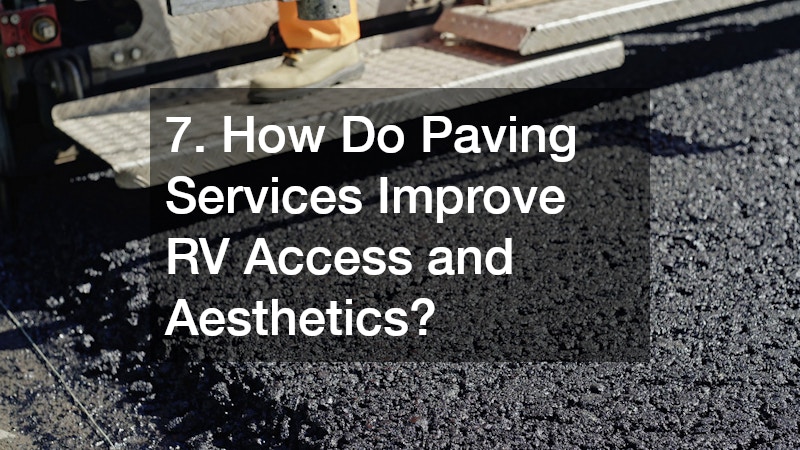
Paving services can significantly improve accessibility for RV parking, reducing wear on tires and making maneuverability easier. Smooth paved surfaces also facilitate rainwater drainage, preventing puddling and potential foundation issues. This enhancement ensures a welcoming feature for guests, assuring ease in accessing your property.
Paving Aesthetic Considerations
Professional paving can blend seamlessly into existing outdoor decor, leveraging materials like concrete, stone, or brick for a cohesive appearance. The choice of texture, color, and layout can transform a simple road into an aesthetic statement, boosting property value. By focusing on a balance between form and function, paving can complement your overall landscape vision.
8. What Should You Know When Selecting an RV Park for Extended Stays?
Amenities and Facilities
Choosing the right RV park involves considering essential amenities that contribute to a comfortable stay. These facilities, including full hook-up services, Wi-Fi, and recreational areas, enhance the living experience for long-term arrangements. Evaluating these aspects ensures that an RV park complements the desired lifestyle preferences.
Location and Accessibility
The location of an RV park significantly impacts the accessibility and enjoyment of extended stays. Proximity to major roads and attractions adds convenience, while peaceful, scenic locales offer tranquility. Understanding the balance between seclusion and connectivity will guide selecting an ideal RV park.
When booking extended stays, weigh the tradeoffs between rural seclusion and urban convenience:
-
Proximity to Essentials: Ensure you are within a reasonable driving distance of grocery stores, pharmacies, medical centers, and vehicle repair shops.
-
Site Dimensions and Turning Radii: Confirm that the park’s internal roads offer enough clearance for your rig size, and check whether sites are pull-through or back-in.
-
Community Vibe: Look for parks with dedicated long-term sections, which tend to be quieter and more residential than high-turnover night-to-night tourist campgrounds.
Conclusion
Integrating a new RV into your home outdoor space doesn’t have to be overwhelming or disrupt your property’s visual appeal. By choosing the right structural shelter, preparing your pad with the proper rental equipment, engaging certified mobile technicians, and laying down clean paving, you turn a potential storage challenge into a sleek, high-value property upgrade.
Whether your RV serves as a ready-to-go adventure rig, an elegant backyard guest suite, or a personal retreat, taking an intentional approach to its placement guarantees protection for your investment, ease of use, and lasting enjoyment for years to come.